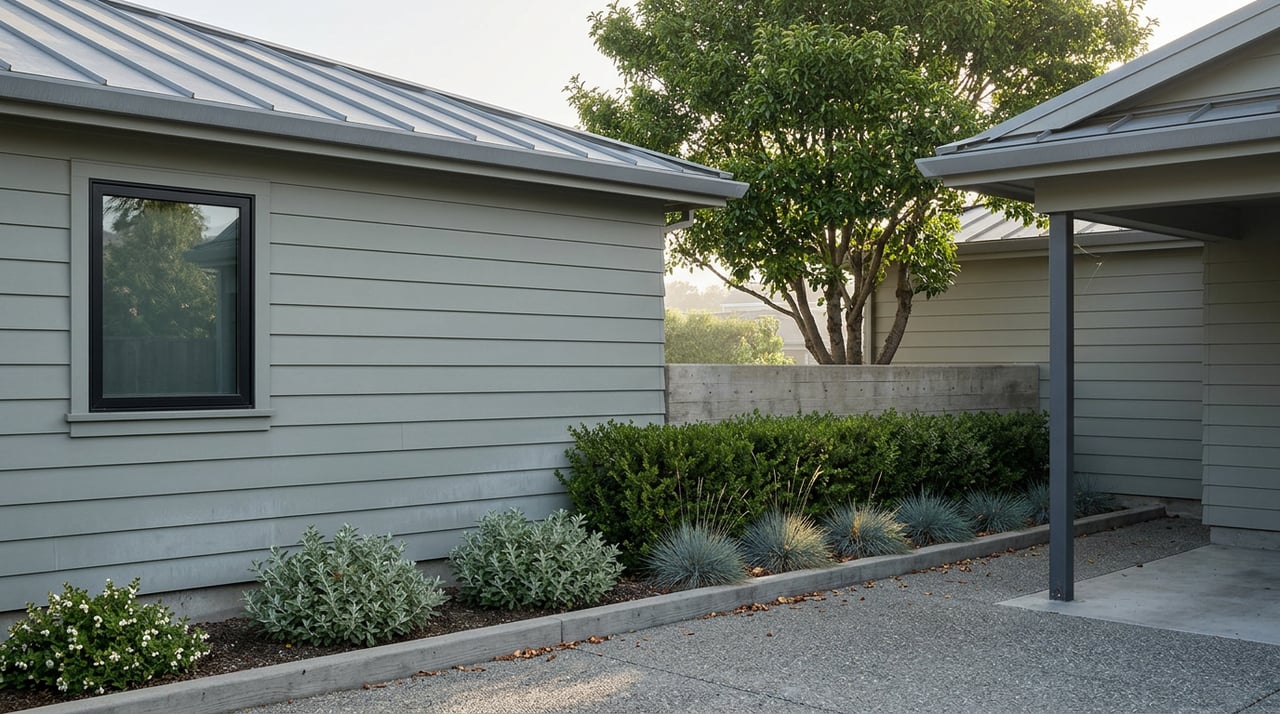
Search "Twin Lakes Santa Cruz median home price" on a Tuesday afternoon and you'll get an answer. Search it again on Thursday, on a different site, and you'll get a different answer. Not a slightly different answer. A neighborhood profile might tell you the median sits around $1.23 million. A live listings feed the same week might show a median list price above $2.5 million. A closed-sales report from Redfin might land somewhere in between, at $1.65 million, and note that it's actually down 3 percent from a year earlier.
Three numbers. One small neighborhood. All current. All technically true.
If you're comparing Twin Lakes against Seabright or Capitola before you make an offer, this isn't a rounding error you can shrug off. It's the reason the "median price" you saw on a portal last week might be actively misleading you about what a home in this pocket of East Santa Cruz is worth. The mechanism behind it says more about how to shop this market than the number itself ever will.
Four sources, one neighborhood, the same season
Here's what the data actually showed heading into late summer 2026.
| Source and timing | What it measured | Figure |
|---|---|---|
| Live listings snapshot, Aug. 16, 2026 | Median list price across 17 active Twin Lakes listings | $2,550,000 |
| Neighborhood valuation estimate, Jan. 2026 | Estimated median value across all home types | $1,226,288 |
| Closed sales report, May 2026 | Median sale price, down 3.0% year over year | $1,649,013 |
That's a spread of more than double, from roughly $1.23 million to $2.55 million, depending on which number you happened to click on. None of these sources are wrong. They're measuring different things.
The math behind the mismatch
Twin Lakes is a small neighborhood by transaction count. A single site's own listing feed showed only 17 active properties on the market in mid-August, with an average of two days on market, which tells you inventory turns over fast and the pool of comparable sales in any given month is tiny. When a market only produces a handful of closings a month, one $6.25 million sale on a four-bedroom, 4,407-square-foot home on 14th Avenue or one $1.775 million sale on 13th Avenue can swing a monthly median by hundreds of thousands of dollars. That's not appreciation or depreciation. That's sample size.
Layer a second problem on top of the first. "Median list price" and "median sale price" are not the same measurement, and neither matches an automated valuation model's blended estimate across every home type in a zip code, whether or not it recently sold. A live listings snapshot skews toward whatever happens to be for sale that week, which in a market this size might be three luxury remodels and one modest cottage, or the reverse. A trailing sales report reflects what actually closed, which lags the market by weeks. A neighborhood-level estimate averages everything on the books, sold or not, updated or original, and can be months out of date by the time you read it.
Put a thin transaction volume and three different definitions of "price" in the same sentence and you get exactly what showed up in the Twin Lakes numbers this year: three defensible answers that disagree by more than 100 percent.
This isn't a Twin Lakes quirk
The same pattern showed up across the harbor in Capitola this year. A citywide Redfin pull in March 2026 put the median sale price per square foot at just over $1,000, up nearly 40 percent year over year. A separate MLS-sourced market report for June 2026 showed single-family homes selling at a median of $1,857,500, up a more modest 4 percent, on just six closed sales and 12 active listings that month. A third source pegged the August 2026 median list price at $1.3 million. Three snapshots, taken months apart, using different definitions, in a city that regularly closes fewer than ten single-family homes in a given month.
Seabright shows the same fingerprint at an even smaller scale. One estimate put the 2026 median around $1.55 million for the neighborhood broadly. Zoom into the Upper Seabright micro-area specifically and the reported median sale price for April 2026 was $1,097,592, down 25.6 percent year over year, a number driven almost entirely by which handful of homes happened to close that month rather than any real shift in what Seabright property is worth.
None of this means the market is unknowable. It means a single headline number, pulled from a single site, on a single day, is the wrong tool for comparing neighborhoods this size.
Why "Twin Lakes" is really several markets wearing one name
Part of what makes the median so unstable is that Twin Lakes isn't one price tier. It's several, stitched together under one neighborhood label.
The area east of 7th Avenue carries the Twin Lakes name because the Santa Cruz Yacht Harbor was carved from one of the original twin lagoons that gave the neighborhood its name. Inside that boundary, the lots on Lake Drive, Alta Loma, and 5th and 6th Avenues tend to be smaller and closer to the harbor's main access road. Cross over to 8th through 10th Avenues and lots open up, traffic drops, and the ocean-view blocks running along East Cliff Drive above Schwan Lagoon carry a different price ceiling entirely than the cottage streets a few blocks inland.
The harbor itself splits at Murray Street, with the Santa Cruz Port District managing a north and south section that behave as distinct micro-markets for anyone weighing proximity to slips and water access. Twin Lakes State Beach, which the California State Parks system describes as running roughly a mile along East Cliff and Portola Drive, sits at the center of it, but a home two blocks from that beach access and a home on the inland side of the same avenue are not competing in the same price bracket even though both get filed under "Twin Lakes" by every portal that reports a single median.
Blend an oceanfront lot on East Cliff Drive with a 1940s cottage on 9th Avenue into one monthly median, and you get a number that describes neither.
What this means if you're pricing a purchase or a listing
If you're comparing Twin Lakes, Seabright, and Capitola on price alone, stop trusting any single median you find in isolation. Ask instead for a trailing 6 to 12 month view segmented by the actual sub-pockets described above, not the whole zip code blended together. Price per square foot, tracked block by block rather than neighborhood-wide, tells you far more about what your money buys than a headline figure that might reflect one unusual sale.
If you're the one selling, this cuts the other way. A buyer who anchors to the highest number they found online may walk away from your listing expecting a similar figure elsewhere. A buyer anchored to the lowest number may lowball you on the assumption your home should trade near a citywide average that has nothing to do with your specific block. Either way, the fix is the same: get comps pulled from the sub-pocket your home actually sits in, not the label it happens to share with three other price tiers.
For a deeper look at how these boundaries play out day to day, our Twin Lakes neighborhood guide and our harbor calendar piece cover the on-the-ground texture that the raw numbers miss. If you're weighing Twin Lakes against nearby Seabright or Capitola, our breakdown of Capitola Village versus Upper Capitola walks through a nearly identical micro-market split.
A few questions worth asking before you trust a number
Which price should I actually use when making an offer? None of them in isolation. Ask for a comp set filtered to the specific block or sub-pocket, sold within the last 6 to 12 months, and treat any single-month median as a starting conversation rather than a verdict.
Does this affect what an appraiser will use? Appraisers already work at the level of detail this piece is arguing for. They pull comps from the immediate area, adjust for lot size, view, and condition, and generally ignore neighborhood-wide medians entirely. The mismatch shows up mainly in how buyers and sellers set expectations before an appraisal happens, not in the appraisal itself.
Is this just a Twin Lakes problem? No. The same volatility showed up in Capitola and Seabright data this year. Any Santa Cruz County micro-neighborhood with a low monthly transaction count will produce headline numbers that swing well beyond what's actually happening to values.
If you're trying to make sense of what a specific block in Twin Lakes, Seabright, or Capitola is actually worth right now, that's a conversation better had with comps in hand than a single number from a single site. Collective Real Estate tracks these micro-markets block by block. Reach out for a tailored comparison, or start with a home valuation built around your specific pocket of the neighborhood rather than the label it shares with three other price tiers.