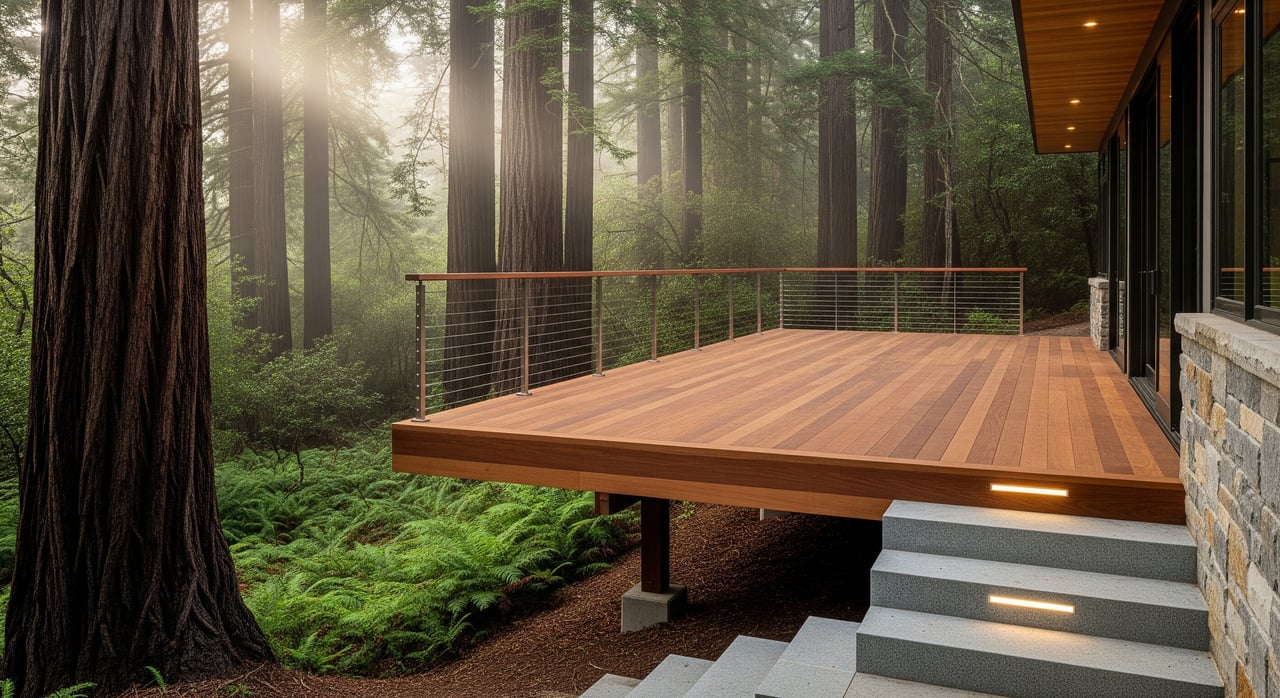
You want a deck that feels at home among the redwoods, but you also want it to pass inspections, meet fire-safety expectations, and hold up to our coastal climate. Building or replacing a deck in Santa Cruz can bring extra questions about materials, permits, and defensible space, especially if your property sits in or near the wildland urban interface. This guide breaks down what you need to know about fire-smart materials, local codes, permit steps, and simple design details that can help protect your home and improve insurability. Let’s dive in.
Start with wildfire and WUI context
Before you sketch a layout, confirm where your property sits relative to wildfire risk. In Santa Cruz County, some parcels fall within state responsibility areas or mapped fire hazard severity zones. Your location can influence which wildfire construction rules apply and whether the local fire agency will review your plans.
If your site is close to redwoods, plan for potential ember exposure as well as radiant heat. Slope, tree cover, and wind patterns matter. This early homework helps you select the right materials and set realistic expectations for permit timing.
Know the codes that apply
Several state and national references shape deck projects here, along with local policies:
- California Public Resources Code Section 4291 sets defensible space requirements around structures. You will often see 100 feet of fuel reduction guidance, adjusted to your site and agency direction.
- The California Building Code and California Residential Code govern structure, guards and handrails, loads, and egress for decks. Local amendments can apply.
- Wildland urban interface guidance such as the International WUI Code and NFPA 1144 informs ignition-resistant construction and plan reviews.
- Local authorities include Santa Cruz County Planning and Building or the City of Santa Cruz Building Division, plus your local fire protection agency. Coastal zone parcels may also require a Coastal Development Permit.
Expect a coordinated review where structural safety and fire-hardening details both get attention.
Choose materials with fire performance in mind
Your deck’s surface, framing, and details each play a role in ignition resistance. No commonly used wood is truly noncombustible, so your choices should balance durability, look, cost, and fire performance.
Noncombustible surfaces
- Metal decking or metal-framed systems with noncombustible surfaces offer the strongest resistance to ignition. Steel and aluminum will not support combustion, but you should design connections to avoid unnecessary heat transfer to any combustible framing.
- Concrete pavers, poured concrete, or stone surfaces are noncombustible and stable. They are heavy, so you need adequate structure to support the load.
Fire-retardant treated wood (FRTW)
FRTW can reduce flammability and slow charring but still has combustible properties. Performance depends on the treatment and exposure over time. Weathering and leaching can change results, so maintenance and documentation matter.
Capped composites and PVC
Capped composites blend wood fibers with plastic binders and a protective shell. Behavior varies by brand. Some products resist ember ignition better than natural wood, while others may soften or melt under direct flame. Solid PVC is combustible and can melt and drip when exposed to high heat, even if labeled as ignition resistant.
Natural redwood, cedar, and softwoods
Traditional in Santa Cruz and visually appealing, these species remain combustible, even with topical fire-retardant coatings. If you prefer the look of wood, combine it with robust ember-resistant design details and disciplined maintenance.
Modified woods
Thermally modified or acetylated woods can improve decay resistance, but fire performance varies and they remain combustible. Ask for project-specific data if you consider these options.
How to verify fire-performance claims
Manufacturers use different tests, and not all results are comparable. Look for:
- Surface burning data such as ASTM E84 flame spread and smoke developed values.
- Heat release or ignition behavior from cone calorimeter tests like ASTM E1354.
- Ember and radiant heat evaluations that simulate real wildfire conditions.
- Third-party listings or reports from recognized labs and evaluators such as UL, FM, or ICC-ES.
Ask for the specific report that matches the exact product line and thickness you plan to use. Keep copies with your permit and insurance files.
Design details that reduce ignition risk
Thoughtful detailing often delivers bigger safety gains than a single product choice.
- Flash and seal the ledger connection. Use continuous metal flashing at the deck-to-house seam to block embers and water.
- Control gaps. Keep board spacing tight enough to limit ember lodging while still allowing drainage. Pay special attention at edges and seams.
- Enclose or screen the under-deck area with noncombustible materials. Avoid open voids that collect leaves and embers.
- Skip combustible skirting. If you add skirt materials, choose noncombustible options and include access for cleaning.
- Use corrosion-resistant fasteners and connectors that match your material. Design connections so heat does not easily transfer into combustible framing.
- Keep the deck clean. Plan easy access for sweeping and under-deck maintenance. Do not store combustibles beneath the deck.
Permits in Santa Cruz: what to expect
Permitting requirements vary by site and scope. Early conversations with the County or City and your local fire agency will save time.
When a permit is needed
You typically need a building permit for:
- New decks or replacements that change the size, footprint, or load-bearing setup.
- Decks attached to the house.
- Decks with a walking surface more than about 30 inches above grade, depending on local thresholds.
- Structural changes, new footings or pilings, or additions such as stairs and guards.
Minor repairs may not require a full permit. Replacing framing or expanding the footprint usually triggers review.
Fire-safety review items
Plan reviewers look for guard and handrail compliance, structural capacity, and attachments. In higher hazard areas or mapped WUI zones, they may require ignition-resistant materials or ember-hardening measures. Larger projects also consider egress and access.
Tree protection, coastal, and site specifics
Many redwoods fall under local tree protection or heritage tree ordinances. Trimming, cutting, or removal can require separate permits and sometimes an arborist report. If you are in the coastal zone, a Coastal Development Permit may apply.
Documentation and professionals
Be ready to submit:
- A site plan showing the deck footprint, setbacks, tree locations, and defensible space work.
- Construction drawings with framing details, footing plans, and guard sections.
- Structural calculations when spans or loads exceed prescriptive limits.
- A fire-agency compliance letter when WUI provisions apply.
- Contractor credentials, and for complex designs, an architect or engineer stamp.
Inspection sequence and timing
Typical inspections include pre-pour footing, framing, and final. Inspectors verify connections to the house, guard and rail heights, and any required fire-hardening details.
Pair your deck with defensible space
Defensible space protects the structure and the deck by reducing fuel around them. Use the following zones as a guide alongside local direction.
Zone 0 to 5 feet
Create a lean, clean, and green buffer right up to the deck and walls.
- Use noncombustible mulch or hardscape near the structure.
- Keep surfaces clear of leaves and needles.
- Avoid storing firewood, propane tanks, or other combustibles close to the deck.
Zone 5 to 30 feet
Reduce and separate fuels to slow fire spread.
- Maintain widely spaced plantings and remove ladder fuels.
- Prune lower tree branches and keep furniture or grills a safe distance from edges and siding.
Zone 30 to 100 feet
Thin and selectively remove vegetation to cut crown fire potential. Follow PRC 4291 guidance and your local fire agency’s recommendations.
Landscaping and hardscape near decks
Within the first few feet, choose hardscape or low, irrigated plants that hold little fuel. Keep tree canopies trimmed to avoid overhanging the deck or roof. When you entertain, position grills and fire features well away from the deck and siding.
Insurance and value considerations
Insurers increasingly evaluate wildfire risk and may set underwriting requirements tied to WUI hardening. Smart deck choices and defensible space can improve eligibility or premiums.
Actions that can help:
- Replace combustible decking with noncombustible or tested ignition-resistant materials.
- Add ember-resistant features such as a fully flashed ledger, enclosed or screened under-deck areas, and noncombustible skirting.
- Document compliance with PRC 4291 and any local fire-agency guidance.
- Maintain a written plan for seasonal cleaning and vegetation management, including dated photos.
Ask your insurer upfront what documentation they will need, then keep permits, invoices, and photos organized for submission.
A practical checklist to move forward
Before design and construction
- Confirm your location on state responsibility area and local fire hazard maps.
- Contact Santa Cruz County or the City of Santa Cruz Building Division and your local fire agency to understand permit triggers, WUI requirements, and tree protections.
- Check coastal zone and Coastal Development Permit requirements if applicable.
- Call your insurer to learn what wildfire hardening measures they recognize and how to document work.
Design priorities
- Favor noncombustible surfaces where practical. If you choose wood, composites, or PVC, request third-party test reports for ember and ignition resistance, and keep them on file.
- Specify continuous ledger flashing, ember-resistant under-deck enclosures, and board spacing that limits ember catch points.
- Plan low-fuel landscaping within 30 feet, with hardscape near the house and deck.
Permitting and contracting
- Hire a licensed contractor experienced with local WUI details and ember hardening.
- Prepare a site plan that maps trees, setbacks, and defensible space work, plus complete construction drawings.
- Obtain permits before demolition or construction. Schedule footing, framing, and final inspections early.
Maintenance and records
- Set seasonal reminders to clear gutters and sweep surfaces, and remove needles and leaves under the deck.
- Keep permits, test reports, invoices, and photo documentation for code and insurance needs.
When you plan your deck with fire behavior, codes, and site conditions in mind, you gain more than a great outdoor room. You protect your home, support insurability, and help your project sail through review.
Ready to align materials, permits, and defensible space for your Santa Cruz deck project? Connect with our local network of builders, arborists, and engineers to move from idea to approval with confidence. Let’s connect and plan your next step with Collective Real Estate.
FAQs
Do I need a permit to replace an existing deck in Santa Cruz County?
- You typically need a permit if you change the size or structure, if the deck is attached to the house, or if the walking surface is more than about 30 inches above grade. Minor like-for-like repairs may not require a full permit. Always confirm with the County or City.
Which deck materials perform best for wildfire near redwoods?
- The most ignition-resistant options are noncombustible surfaces such as metal or concrete pavers. If you choose wood, composites, or PVC, look for products with independent ember and ignition testing and pair them with ember-resistant details.
How do WUI maps affect my deck project?
- If your property is in a mapped high hazard or state responsibility area, the local fire agency may require ignition-resistant materials and ember-hardening details, along with plan review and inspections.
What is Zone 0 and how should I treat the area around my deck?
- Zone 0 is the first 0 to 5 feet from the structure. Keep it lean, clean, and green by using noncombustible mulch or hardscape, clearing debris, and keeping combustibles away from the deck and siding.
Will insurance premiums improve if I upgrade my deck and defensible space?
- Insurers are looking closely at wildfire risk. Using ignition-resistant materials, enclosing under-deck areas, and documenting defensible space can improve eligibility and may help with premiums. Ask your carrier what evidence they need.
Are redwood trees protected during deck construction?
- Many redwoods are protected by local ordinances. Trimming or removal can require permits and sometimes an arborist report. Check with the County or City before planning any tree work.